Dr. Marco V. Benavides Sánchez. Medmultilingua.com /
In the early twentieth century, television was more technical promise than established medium. Mechanical scanning systems produced fragile grayscale silhouettes, offering proof of concept rather than immersive experience. The next challenge was not merely transmitting motion, but reproducing human visual perception in its chromatic richness.
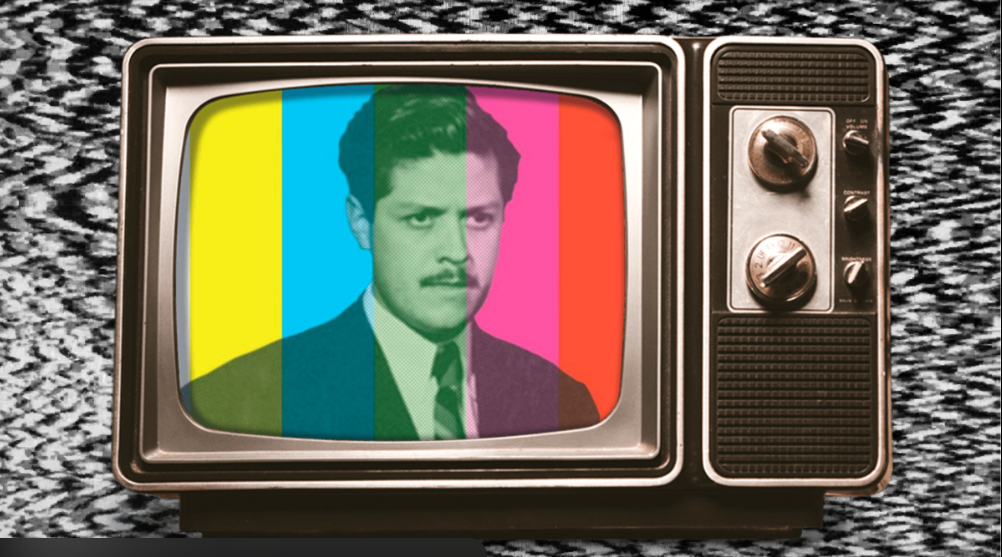
Within this landscape emerged the work of Mexican engineer Guillermo González Camarena (1917–1965), whose research into trichromatic transmission unfolded alongside European and American experimentation. Working outside major industrial laboratories, González Camarena combined radio engineering, optics and applied electronics from a modest workshop in Mexico City.
In 1940 he registered his “Sequential Trichromatic Field System” in Mexico, later securing a United States patent in 1942. The principle was technically straightforward yet conceptually refined: decompose images into red, green and blue components and transmit them sequentially through synchronized rotating filters at both transmission and reception. Retinal persistence allowed the viewer to integrate these rapid sequences into a unified color image.
This approach paralleled developments elsewhere. Scottish pioneer John Logie Baird had demonstrated mechanical color systems in the 1920s, while in the United States CBS briefly advanced a field-sequential system in the early 1950s. Ultimately, the decisive breakthrough came from the Radio Corporation of America, whose fully electronic and backward-compatible design became the prevailing broadcast standard.
Although González Camarena’s system did not achieve global standardization, its importance extends beyond industrial adoption. It demonstrated that color transmission was technically viable outside the dominant centers of technological power. In 1963 Mexico conducted early official color broadcasts using his technology. Simplified adaptations were also examined by the NASA in experimental contexts where bandwidth efficiency was critical.
The history of color television reflects a broader pattern in applied science: multiple parallel solutions emerge to address a shared technical challenge, yet only some become standardized—shaped not solely by performance, but by economic infrastructure, regulatory decisions and industrial scale.
The transition from monochrome to color transformed more than broadcast engineering. It altered visual culture, journalism, advertising and collective memory. Color expanded representational fidelity and emotional resonance, redefining television as a sensory medium.
González Camarena’s legacy lies precisely in this intersection of vision and engineering. From outside the established technological epicenters, he articulated a rigorous and workable solution to one of the twentieth century’s central communication challenges. His work stands as a reminder that scientific innovation is geographically diffuse, propelled as much by disciplined curiosity as by industrial capacity.
📚 References
- Archivo General de la Nación (México) – Patentes de González Camarena
- United States Patent Office, Patent No. 2,296,019 (1942)
- Smithsonian National Museum of American History – Historia de la televisión a color
- IEEE Global History Network – Development of Color Television
- Enciclopedia Británica – Color Television
🔖 Recomended Hashtags
#ColorTelevision #GuillermoGonzalezCamarena #HistoryOfTechnology #MexicanInnovation #BroadcastHistory #EngineeringHistory #Medmultilingua.
Leave a Reply